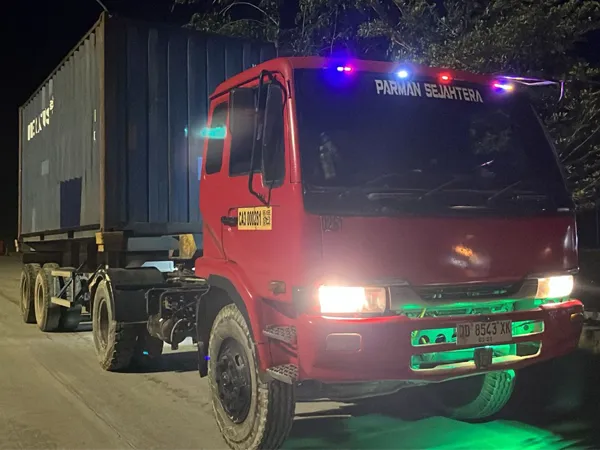
Building Material Expedition
Timely hauling of sand, stone, steel, and other project materials.
| Cargo type | Material bangunan (pasir, batu, besi, semen, dll.) |
|---|---|
| Service area | Seluruh Indonesia / Nationwide |
Building Material Expedition is PT Maju Jensina Jaya's service for delivering project materials -- sand, split stone, reinforcement steel, cement, through to prefabricated materials -- to construction sites, safely and on schedule. Because we operate under the same group as the construction unit (CV Anugerah Jensina Sejahtera), delivery schedules can be synchronized directly with on-site progress, cutting material wait times and reducing clutter at tight project sites.
What Sets This Service Apart
Delivering building materials differs from ordinary freight expedition because of the cargo's nature: bulk material like sand and split stone needs its own load/unload handling, while reinforcement steel and prefabricated material need proper securing so it doesn't shift or bend during transit. We designed this service specifically around construction-material characteristics, not just general freight that happens to carry heavy loads.
Being under the same group as the construction unit, we can align material delivery schedules directly with on-site work stages -- material is delivered as each stage needs it, rather than arriving all at once in a large volume that makes storage difficult at a tight project site.
Scope of Service
- Hauling bulk material: sand, split stone, gravel, and fill soil.
- Hauling reinforcement steel, cement in bags or bulk, and bricks/concrete blocks in large quantities.
- Hauling prefabricated material such as concrete panels or structural elements cast off-site.
- Staged delivery scheduling matched to work progress, not just a single large delivery.
- Coordinating delivery timing to avoid traffic congestion around the project site at certain hours.
Delivery Stages
- Material needs confirmation. The client or project team shares the material type, volume, and target arrival time, forming the basis for fleet scheduling.
- Delivery scheduling. The schedule is aligned with on-site work stages, especially for projects also handled by Jensina Group's construction unit.
- Loading at the material source. Material is loaded from the supplier or warehouse, with a basic volume and quality check before departure.
- Transit & delivery. The fleet travels the confirmed route and schedule, with departure timing adjusted as needed to avoid traffic congestion.
- Unloading & handover. Material is unloaded at the agreed point on the project site, checked for volume and condition together with the site lead.
Fleet and Load-Handling Standards
We use a truck fleet sized to each material type -- dump trucks for bulk material like sand and split stone, and flatbed trucks for reinforcement steel, cement, and bagged material. Every load is arranged and secured to match its characteristics: bulk material is leveled and covered with tarp to prevent spillage or wind loss during transit, while reinforcement steel is tied down at several points so it doesn't shift or bend from road jolts.
For prefabricated material, which is more vulnerable to impact, we add protective layers and arrange load positioning to minimize friction between elements during transit, so material arrives on site intact and ready to install.
Different Handling for Each Material Type
Sand and split stone need different handling than reinforcement steel or cement. For bulk material, the main concern is covering the load so it doesn't spill or blow off en route, and choosing an unloading point that doesn't block other vehicle access at a project site that's usually still busy with activity.
For reinforcement steel, we account for bar lengths that often extend beyond the vehicle bed, so securing and marking (such as a warning flag at the load's end) matters for the safety of other road users. Bagged cement needs protection from moisture during transit, especially in the rainy season, so its quality holds up on arrival and it's ready for pouring work.
Prefabricated material such as concrete panels, meanwhile, needs special arrangement so elements don't stack directly against each other, since impact between elements during transit risks cracks that only show up after installation. We use spacers and load positioning suited to this material type.
Jensina Group's Competitive Advantage
- Directly connected to the construction unit. For projects also handled by CV Anugerah Jensina Sejahtera, material delivery schedules can be synchronized automatically with work stages, so clients don't have to coordinate two separate vendors.
- Staged delivery, not all at once. We help clients plan deliveries matched to each stage's needs, reducing the risk of material piling up and getting damaged from sitting too long in the open.
- Own fleet. As part of PT Maju Jensina Jaya, we don't depend on third-party freight vendors, so schedules stay more flexible to project needs.
- Experience across material types. Our team routinely handles bulk material, steel, and prefabricated elements, and understands the right handling method for each.
Workplace Safety Standards
Delivering building materials involves repeated loading and unloading, making safety at this stage a top priority. We apply personal protective equipment for the team involved in load/unload work, checking the unloading area so it doesn't interfere with other work activity on site, and positioning vehicles during load/unload so they don't block equipment mobilization routes or other workers. For bulk material deliveries, we also account for wind direction and load covering so dust doesn't disturb the surrounding area, especially at sites near residential areas.
Typical Needs We Handle
This service is commonly used for delivering structural-stage material like reinforcement steel and cement in large volumes, supplying sand and split stone for staged concrete pours, delivering finishing material such as lightweight brick or concrete block ahead of wall work, and delivering prefabricated elements for projects with tight installation schedules. Each material type carries different delivery considerations -- bulk material, for example, needs scheduling close to time of use so it doesn't pile up and get wet from rain, while prefabricated material needs precise schedule coordination so the installation equipment (crane or other lifting gear) is ready when the material arrives. We're happy to discuss the best delivery sequence together with the client's project team.
Service Area
Our Building Material Expedition service covers deliveries to project sites across Indonesia. Based in Karanganyar, Central Java, we're ready to reach various regions per project needs. Please contact us first so our team can calculate estimated cost and travel time.
Frequently Asked Questions
Can deliveries be scheduled repeatedly to match project progress?
Yes. We routinely set up staged delivery schedules that follow on-site work stages, especially for projects also handled by our construction unit.
What's the minimum delivery volume?
Minimum volume depends on material type and the fleet capacity used. Share your needs with us so we can recommend the most suitable fleet.
What if the material received doesn't match the order?
We check material volume and condition before departure and at handover on site, so if a discrepancy is found, it can be confirmed and followed up on right away.
Can several material types be delivered in one schedule?
Yes, as long as it fits the capacity and type of fleet used. Our team will help arrange the most efficient delivery combination.
Can deliveries happen outside normal working hours?
For sites with heavy-vehicle operating hour restrictions, we can adjust delivery schedules to off-peak hours in coordination with the project site lead.
Fleet Availability and Scheduling
Our material-delivery fleet also supports Jensina Group's internal project needs, so during periods with many projects running at once, we recommend clients share delivery needs as early as possible. For staged deliveries on long-term projects, scheduling at the project's start helps us allocate fleet consistently across the work duration, without the schedule risking a clash with other clients' delivery requests.
For urgent needs, such as a material shortage mid-pour, we still try to deliver as fast as possible based on fleet availability at the time.
Managing Risk During Delivery
The main risks in building-material expedition are delays from road conditions or weather, and potential material damage during transit or storage. For delay risk, we monitor route conditions before departure and adjust schedules if we find issues such as road repairs. For material damage risk, load arrangement and securing follow the standard for each material type, and bulk material is always covered with tarp to protect against rain and dust during transit.
We also communicate actively with the client or project team about material arrival schedules, including notifying them of any schedule adjustments, so storage space and unloading labor on site can be prepared on time.
How to Get Started
Contact us via the Contact page or WhatsApp, mentioning the material type and volume needed, project location, and target arrival time. Our team will follow up with delivery scheduling and a cost estimate before the shipment begins.