
Earthworks
Cut and fill, land leveling, and site preparation ahead of construction, carried out with heavy equipment and experienced operators.
| Scope | Land clearing, cut and fill, pemadatan, drainase awal |
|---|---|
| Equipment | Excavator, dump truck, alat pemadat |
| Process | Survei → cut and fill → pemadatan → finishing |
| Service area | Seluruh Indonesia / Nationwide |
Earthworks by CV Anugerah Jensina Sejahtera is a land preparation service performed before construction begins -- covering land clearing, cut and fill, grading, soil compaction, and initial drainage shaping -- carried out with our own heavy equipment and experienced operators, so the site is ready to build on at the planned elevation and bearing capacity.
What Sets This Service Apart
Unlike Excavator Rental, which is a per-day or per-project equipment rental, Earthworks is a contracted service: the client shares the target elevation, cut-and-fill volume, or desired end condition of the site, and our team takes full responsibility for the result, from volume calculation and equipment scheduling through to compaction meeting the agreed standard.
This service typically comes before Commercial & Institutional Building Construction, House & Shophouse Construction, or other infrastructure projects, but it can also stand alone for needs such as preparing housing plots, converting former farmland into industrial land, or correcting uneven site contours.
Scope of Work
- Land clearing: removal of vegetation, debris, and unused material from the work area.
- Cut and fill: stripping soil from higher areas and depositing it in lower areas to reach the planned elevation.
- Grading and contour shaping according to shop drawings or site drainage needs.
- Staged soil compaction, layer by layer, so the resulting bearing capacity meets the needs of the structure above it.
- Shaping temporary or permanent drainage channels so rainwater doesn't pool in the work area.
- Hauling excess excavated soil or bringing in fill soil from outside the site when needed.
Earthworks Stages
Every earthworks job is broken into sequential stages so clients understand the process and can track progress instead of guessing at site status.
- Survey & initial measurement. Basic topographic measurement of the existing contour, followed by cut-and-fill volume calculation based on the elevation agreed with the client.
- Site preparation. Clearing vegetation and unused material, planning heavy-equipment mobilization routes, and setting elevation reference stakes at key points.
- Cut and fill execution. Excavating and filling soil using excavators and dump trucks, done zone by zone so progress is easy to control and completed areas aren't disturbed.
- Staged compaction. Each fill layer is compacted before the next is added, following a layer thickness matched to the compaction equipment's capacity.
- Finishing & final check. Checking final elevation against reference stakes, shaping drainage channels, and clearing the site before handover to the next construction stage.
Equipment and Quality Standards
Earthworks depend heavily on equipment accuracy and work method. We use excavators for digging and moving soil, dump trucks for hauling excess soil or bringing in fill material, and compaction equipment (vibratory rollers or stampers, sized to the area) to ensure fill density meets the needs of the structure above it.
For projects requiring a specific compaction level (such as for a building foundation or heavy-vehicle parking area), compaction is done in measured layers rather than filling in one large volume at once, since single large fills risk leaving air pockets that cause the soil to settle later. When clients have soil test results from a geotechnical consultant, we adjust our work method to match those recommendations.
Handling Different Site Conditions
Not every site presents the same challenges, so we adjust our work method to the existing soil condition. On former rice-field land, soil moisture is usually still high, so a drying stage and temporary drainage channels need to be set up early, before compaction, so the compacted result doesn't quickly settle again from water still trapped in the lower layers.
On steep or hilly contoured land, we apply a staged benching method -- shaping the land into a series of steps before fully leveling it -- so heavy equipment can work safely and the risk of landslide during work is reduced. Conversely, on hard or rocky soil, we adjust the excavator bucket type and, when needed, allow extra time for the initial excavation stage, since equipment works more slowly than on ordinary soft soil.
For land near swampy areas or with a shallow water table, we add a dewatering stage (drying the work area) before cut and fill begins, so work isn't held up by standing water and compaction results still meet the planned standard.
Jensina Group's Competitive Advantage
- One group, no extra vendors. Heavy equipment, soil-hauling fleet, and the execution team are all under one business group, removing the need for separate coordination with outside equipment or hauling vendors.
- Straight into construction, no gap. Being under the same group as the building and house/shophouse construction units, earthworks scheduling can be aligned directly with the planned construction start, without waiting on a new contractor.
- Transparent volume calculation. Cut-and-fill volume is calculated up front and shared with the client before work begins, so there's no major gap between estimate and actual site results.
- Experience across site conditions. Our team routinely handles former rice fields, contoured land, and hard soil, and adjusts its work method to each condition.
Workplace Safety Standards
Earthworks involve intensive heavy-equipment and hauling-vehicle movement in one area, making traffic management within the site a top priority. We apply clear mobilization routes for equipment and vehicles, warning signage in active work areas, standard hand signals for coordination between equipment operators and site supervisors, and standard personal protective equipment (helmets, work boots, and reflective vests) for the whole team on site. For land bordering a public road or residential area, we add extra barriers and signage for the safety of nearby residents.
Typical Project Types
Common earthworks projects include preparing housing plots before unit construction begins, leveling factory or warehouse land ready for foundation work, correcting sloped contours into level ground for parking areas or fields, and cut-and-fill work for land that will be built in stages across several project phases. Each type of land carries different considerations -- former rice fields, for example, need extra attention to compaction due to high soil moisture, while steeply contoured land needs more detailed cut-and-fill calculation to balance excavation and fill volumes. We also handle earthworks at small scale, such as leveling one or two housing plots, up to mid-scale jobs for industrial or warehouse areas.
Service Area
Our Earthworks service is available for projects across Indonesia. Based in Karanganyar, Central Java, our team is ready to mobilize heavy equipment to various regions per project needs. Please contact us first so our team can estimate mobilization needs before drawing up a quote.
Frequently Asked Questions
How is cut-and-fill volume calculated?
We measure the site's existing contour, compare it against the elevation the client has agreed to, then calculate the required excavation and fill volume. This calculation is shared before work begins as the basis for the quote.
Does the client need to supply fill soil?
Not necessarily. If the site needs additional fill soil, we can source and haul it to the location. If the client already has their own fill source, we can adjust the work plan to match it.
How long does earthworks take?
Duration depends on land area, cut-and-fill volume, and existing soil conditions. A precise estimate follows a site survey and volume calculation.
Can earthworks be combined with the building construction stage?
Yes. Being under the same group as the construction unit, earthworks scheduling can be arranged to flow directly into the structural construction stage without a waiting period for a new contractor.
Is there progress documentation while work is underway?
Yes. We provide photo documentation at key work points (before, during, and after cut and fill in each zone) along with a record of completed volume, so clients can track progress even when they can't be on site.
Managing Risk During the Project
The main risks in earthworks are weather and soil conditions that differ from initial estimates. For weather, we schedule work around local rainfall patterns, since heavy rain can temporarily halt compaction work. For soil conditions, if we find a significant difference from the initial estimate (such as soft soil requiring extra handling), we share the finding with the client along with work-method adjustment options before proceeding, so there are no surprise cost changes mid-project.
We also welcome site visits from clients while work is underway, so clients can see cut-and-fill and compaction progress directly instead of waiting for a final report.
How to Get Started
Contact us via the Contact page or WhatsApp, mentioning the land area and location, current site condition, and the intended use of the land once earthworks are complete. Our team will follow up with a site survey and measurement schedule before drawing up a work plan and quote.
Related products
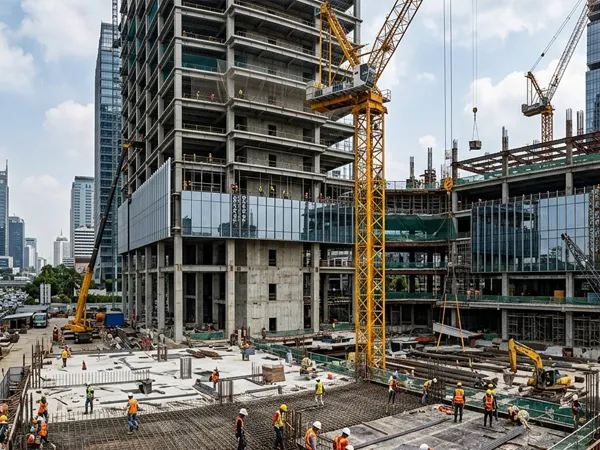
Commercial & Institutional Building Construction
New-build construction of buildings such as offices, schools, warehouses, and multi-story commercial facilities, from planning through handover.
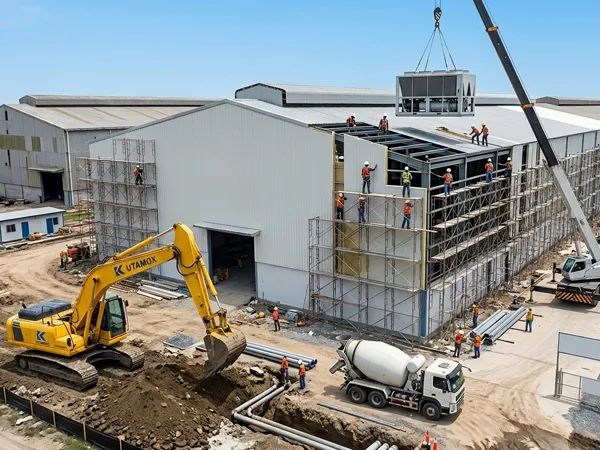
Commercial & Industrial Building Renovation
Renovation and expansion of commercial buildings, warehouses, and industrial facilities.
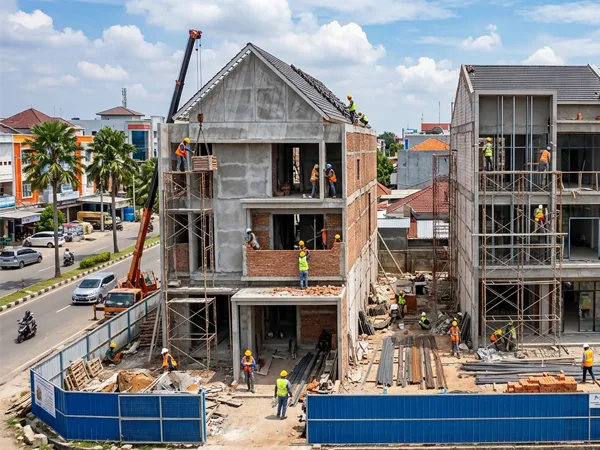
House & Shophouse Construction
Residential and shophouse construction from planning through handover.